Proximal form
Explore clinician comments on contact, contour, marginal ridge anatomy, and flash control.

Pro-Matrix® clinician perspectives
Clinician perspectives on using a pre-loaded matrix system in their practice.
Read the guide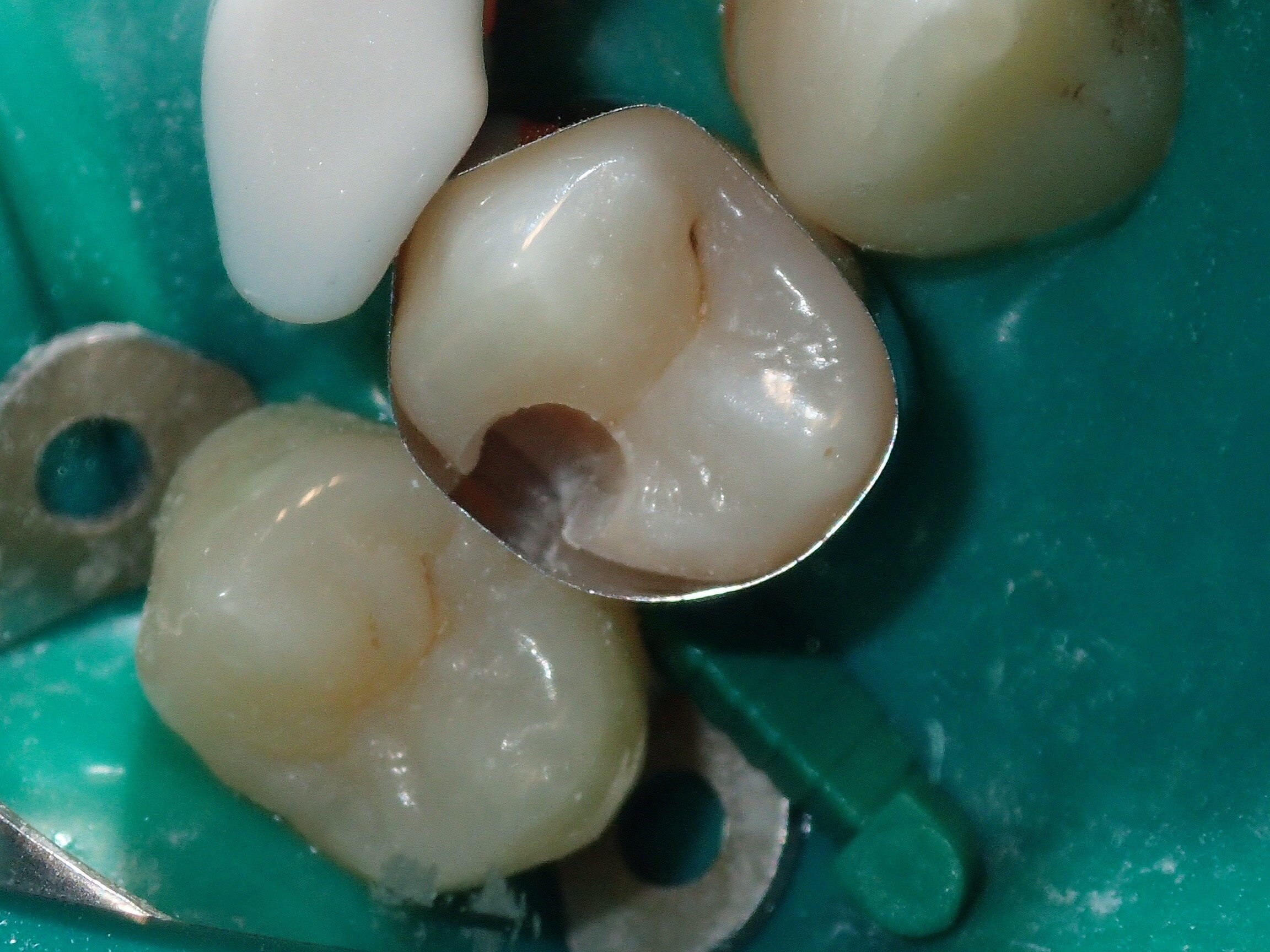
Explore clinician comments on contact, contour, marginal ridge anatomy, and flash control.
Review experiences with pre-loaded bands, adjustment, stability during composite placement, and single-use setup.
Read examples involving indirect pulp caps, post-core buildups, and restorations beside crown preparations.
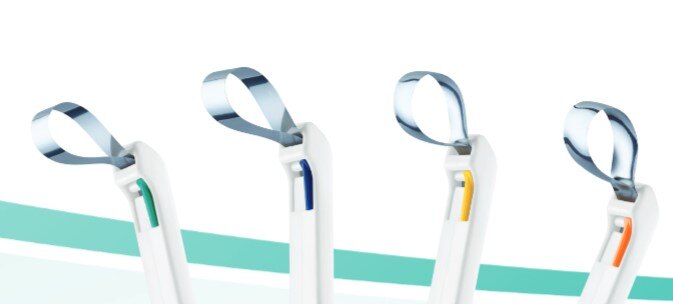
Pro-Matrix® is a pre-loaded, fully disposable matrix system with a built-in toggle for band angulation. Explore product details, watch the demonstration, and request a free sample to evaluate placement and adjustment in your practice.
Learn more and request a free sampleClinician perspectives on using a pre-loaded matrix system in their practice
A restoration is only as good as the form it is built against. In Class II and other proximal restorations, the matrix band defines the outcome long before the curing light comes on. A well-chosen, well-adapted band helps the clinician achieve:
Traditional retainer-based systems can achieve these goals, but they take time to assemble, clean, and sterilize, and they can be awkward to place in some patients and some locations. Pre-loaded, single-use systems aim to remove that friction. This paper collects what practicing clinicians say about one such system, in their own words, so you can weigh their experiences against your own.
Clinicians who requested a Pro-Matrix® sample were invited to share their experience. Their feedback highlighted several key priorities and considerations, including:
| What matters most | What clinicians had to say |
|---|---|
| Ease of use and placement | Simple, intuitive band placement and adjustment; less fuss than threading a traditional retainer |
| Contour, contact and margin | Anatomic proximal form, predictable contacts, built-in marginal ridge, flash control |
| Efficiency and chair time | Faster setup and removal; time saved on assembly and reprocessing |
| Difficult or high-stakes cases | Pulp caps, post-core buildup, restorations next to crown preps |
| Tissue and patient comfort | No lip or cheek pinching; narrow front section; kind to tissues |
| Pre-loaded / disposable workflow | No assembly or sterilization; supports infection control |
| Stability during placement | Band stays put during composite placement |
| Cost-effectiveness | Less expensive than a previously used system; saves time and money |
Ease of use was the most frequent comment. Several clinicians compared the system directly with a traditional retainer and band, and one dental student pointed out the value of not having to thread the band by hand while learning at speed.
“Very easy to use, makes life a bit easier for difficult restorations.”— Dr. Andrew Heinritz, DMD
“Easiest to use matrix out there.”— Dr. Spencer Kemp, DDS
“The Pro-Matrix® system has been life changing as a dental school student. We are learning at such a fast pace, and it’s important that we aren’t held back by things like Tofflemire Matrix Systems where you have to thread the band through yourself.”— Mira Sachdev, dental student
Clinicians repeatedly linked the system to the results that matter most on the finished restoration: proximal contour, contact, and margin quality. One clinician highlighted the marginal ridge built into the contoured band, and another noted flash control with the curved bands.
“Curved orange and yellow have great flash control and restore proper contact.”— Dr. Avi Blashka, Pediatric Dentist
“The bands adapt well to proximal anatomy and consistently provide predictable contact and contour. The system offers good stability during composite placement, reducing the risk of band movement and marginal overhangs.”— Dr. Steven Davidowitz, DDS
“The contoured one has an immediate margin ridge built into it when the tooth is restored and no pinching of the patient’s lip when tightened.”— Ira Biderman, DDS
Because the bands arrive pre-loaded and are disposable, clinicians describe skipping assembly, cleaning, and sterilization. Some also said this made switching between quadrants faster, and one noted problems that can develop when traditional retainer components are sterilized repeatedly.
“Pre-loaded, easy to switch from UL/LR to LL/UR with ease. No sterilization, just put it in the sharps since it’s disposable. A definite time-saver!”— Marie Tomarchio, RDA
“Continued sterilization of the traditional Tofflemire bands leads to difficult placement with the components locking or seizing. Pro-Matrix® is easy to place, kind to tissues, and ultimately saves time making it a more cost-effective alternative to traditional Tofflemire bands.”— Dr. Kristin Mau, DDS
Comfort came up in a handful of comments, particularly the absence of lip or cheek pinching and the visibility offered by the narrower front section of the band.
“The narrow front section of the band enhances visibility for me [and] is less traumatic to the tissue, improving patient comfort.”— Dr. Zenobia Sowell, DDS
Some of the most instructive comments describe specific cases. These make good discussion starters for your own practice.
One clinician used the system on two adjacent premolars.
“I used the system on 2 indirect pulp caps. Came out perfect. Back-to-back premolars, MODB and MODL surfaces!”
Another clinician completed a post-core buildup on tooth #4 for a patient with a strong gag reflex and significant anxiety. The restoration was intended as a temporary solution before a full-coverage crown.
This is a good example of how a stable, efficient matrix setup can matter as much to patient management as to the restoration itself.
“The Pro-Matrix® is perfect for placing well-contoured fillings adjacent to crown preps!”
As you evaluate your matrix system options, here are some questions to ask yourself:
You’ve read what fellow clinicians have to say. Now explore how Pro-Matrix’s pre-loaded, disposable design could simplify restorative procedures in your own practice.
Learn more and request a free sample